 NEW JOURNEY
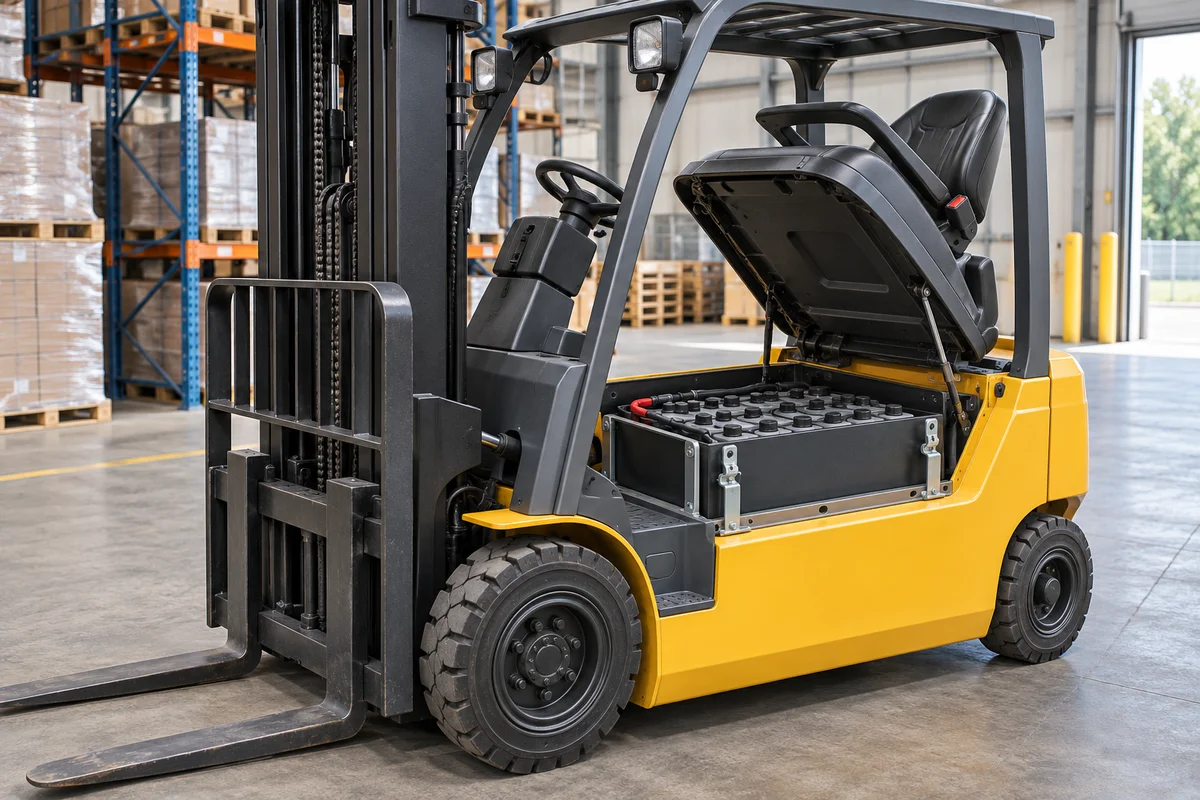
What does the weight on the data sheet include?
The 48V 210Ah LiFePO4 forklift battery lists a nominal configuration of 51.2V 210Ah, a pack weight of 200 kg and dimensions of 949 × 374 × 449 mm (L × W × H). If the offer repeats the 200 kg figure, ask the supplier to mark which parts it includes. Then request the weight as installed, accounting for the enclosure, tray and any required ballast without counting an item twice.
Preserve the capacity on the purchase order. A 48V 200Ah order calls for a quote against that requirement. Neither the catalogued 210Ah forklift pack nor a 250Ah RV pack is an equivalent substitution.
What has to match before purchasing can compare offers?
| Truck requirement | What to check | What the quotation must state |
|---|---|---|
| Permitted battery weight | Compare the truck plate with the complete assembly as installed. | Total battery assembly weight and the enclosure, tray and ballast included. |
| Battery bay and removal path | Check the opening, usable dimensions, retainers and access to disconnect the pack. | A dimensioned drawing showing the cable exit, connector orientation and removal direction. |
| Lift and traction demand | Identify the peak event, duration and whether the two loads overlap. | The current and duration used for selection, plus any duty awaiting confirmation. |
| Shift and charging breaks | Compare the actual breaks with the available charger and its selected profile. | Whether the original charger can stay and the profile or interface on which that decision depends. |
Can the connection be serviced with the pack in place?
The 210Ah example has a top-mounted connection area. Its final connector type and orientation are project-specific. Mark the clearance above the connector with the cover closed and the space available to release it before removal. Show whether the assembly lifts out from above or slides out from the side. The drawing should let maintenance follow the entire route from the installed position to a clear opening.
Which operation sets the peak current?
Tell engineering whether the peak occurs as a lift begins, when the truck starts moving, or while it climbs a ramp. If the truck travels while lifting, identify the overlap. Send the measured or truck-manufacturer current and the duration of the event. For the 210Ah example, charge and discharge limits depend on the approved truck, battery management system and charger configuration.
What should come back with the quote?
Ask for the requested capacity, a dimensioned assembly drawing and the delivered assembly weight including any required ballast. Have the supplier list the current assumptions, their durations and the charger conditions used to select the assembly. These details let purchasing compare offers against the same truck and duty. See the forklift battery range for other truck projects.