NEW JOURNEY
Start with the aircraft, not a capacity target
A UAV battery pack has to match a complete electrical and mechanical system. Begin with the voltage range accepted by the propulsion system and other battery-powered equipment. Record the permitted series count, the upper charge voltage and the lower operating limit. A nominal voltage is a useful label, but it does not describe the full voltage range the equipment will encounter.
Collect the continuous load and any short-duration current requirement separately. Include the duration and operating conditions of a peak requirement, rather than giving a single unexplained current value. Confirm the charging arrangement at the same time: charger output, charging current, balance connection and the intended charging procedure all belong in the selection brief.
If the voltage architecture is still open, use the series-count guide before comparing capacities. Changing the number of series-connected cells is a system decision, not a simple way to make an existing battery larger.
Check the space around the battery
Provide a battery-bay drawing with axis labels, mounting points and a maximum installed mass. Body dimensions alone do not describe connector access, cable bends, strain relief or the space needed to remove the pack. Show where the power and balance leads must exit and how the battery will be retained.
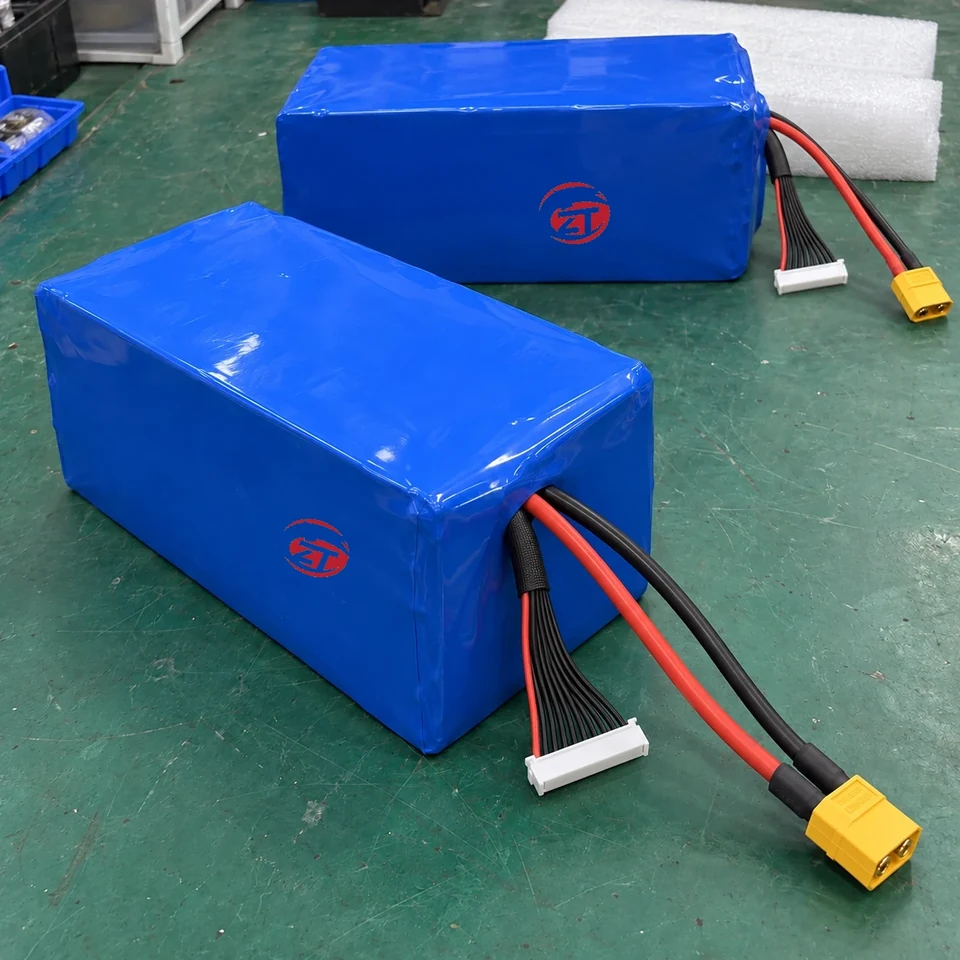
For example, the 12S 16000mAh 25C UAV Battery lists maximum pack dimensions of 190 x 83 x 137mm and a reference pack mass of 3960g. Those values describe that model; they do not establish compatibility with an unmeasured battery bay. Review the drawing and the actual connector arrangement before making a sample decision.
Compare energy and discharge as separate requirements
Capacity is charge capacity, normally stated in Ah or mAh. Compare it with nominal voltage when reviewing nominal energy in Wh. The amount of energy available in a particular installation also depends on its operating limits and conditions, so a capacity figure alone is not an application result.
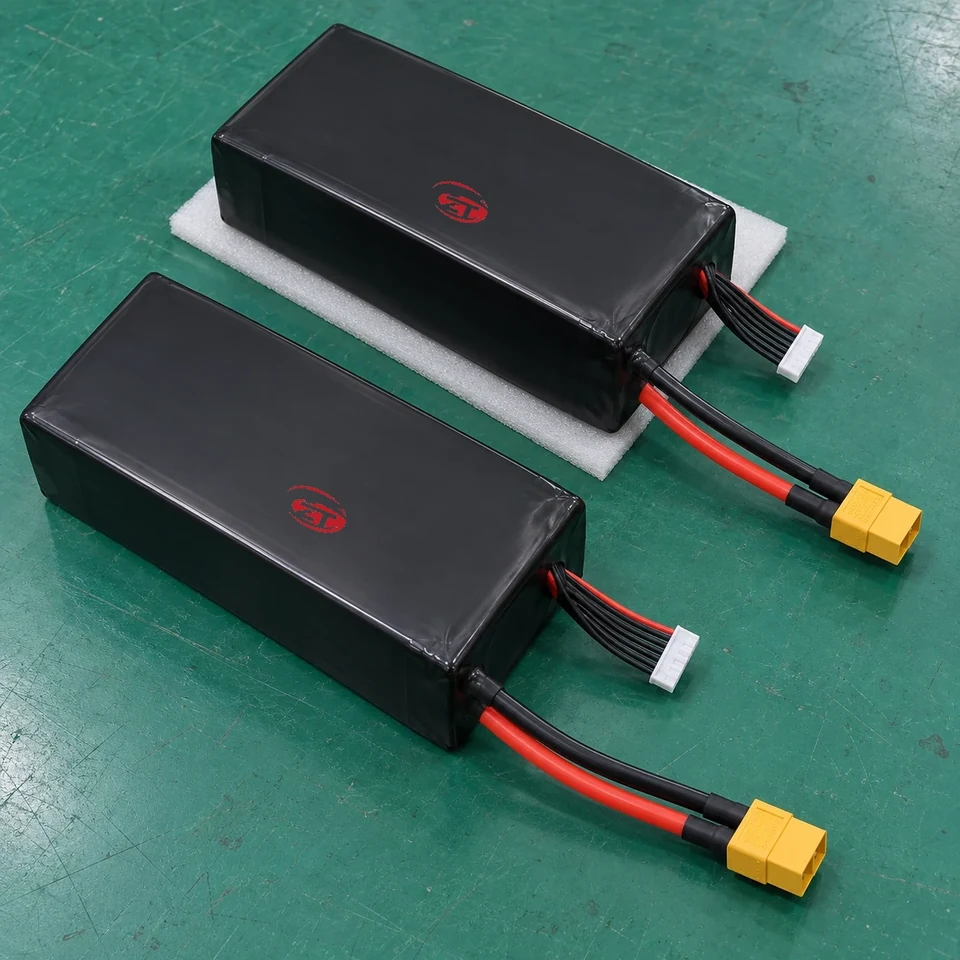
The two packs below illustrate why the voltage architecture must be settled first. Their published nominal energies are calculated values, not measured usable energy for your aircraft.
| Model | Nominal voltage | Rated capacity | Published nominal energy |
|---|---|---|---|
| 6S 12000mAh 25C UAV Battery | 22.2V | 12Ah | 266.4Wh; calculated from nominal voltage and rated capacity |
| 12S 16000mAh 25C UAV Battery | 44.4V | 16Ah | 710.4Wh; calculated from nominal voltage and rated capacity |
Read the discharge qualifications as carefully as the headline capacity. The product specifications distinguish discharge reference figures from the approved limits of the finished harness or power path. Confirm the connector, cable, joints and complete assembly against your load; a C-rate in a product name does not resolve those checks.
Have a drawing and an electrical brief ready? Send your application requirements to discuss a suitable starting configuration.
Choose the relevant product route
Use UAV and Drone Batteries for the broader aircraft pack range, or Multirotor UAV Batteries when that is your aircraft architecture. A high-rate FPV project belongs in FPV Drone Batteries, where the intended load and installation need their own review.
If your brief specifically calls for solid-state or semi-solid options, open Solid-State UAV Batteries and check the designation of each model. The technology name itself does not guarantee longer flight time. It is not a reason to relabel a conventional pack or overlook voltage, mass and discharge constraints.
Prepare a useful enquiry
| Information to provide | What to include |
|---|---|
| Application | Aircraft architecture, equipment being powered and operating conditions |
| Electrical limits | Series count, nominal voltage and accepted operating voltage range |
| Capacity and energy | Required capacity, and the basis of any energy requirement |
| Installation | Available dimensions, mounting method, lead routing and mass limit |
| Discharge | Continuous current, peak current, peak duration and load profile |
| Interfaces | Connector model, mating side, polarity and balance connection |
| Charging | Charger specifications, charge current and charging procedure |
| Environment | Temperature range and other conditions the assembly must address |
| Supply scope | Sample quantity, expected order quantity and required documentation |
Mark an unknown item as a question rather than copying it from another battery. For help turning the brief into a configuration discussion, see Custom OEM battery packs. If your team is designing the assembly itself, the cells and finished packs guide explains where the responsibilities differ.
Your next step
Choose a model whose electrical range fits your system, read its complete specification and identify any unresolved installation detail. Then discuss your UAV battery requirements with New Journey, including the drawing, load information and intended quantity.