
Language
12S 39000mAh UAV Battery
The 12S 39000mAh UAV battery configuration provides 1,684.8Wh of nominal energy at 43.2V. It has a 5,408g reference pack weight and a 215 × 94 × 140mm body. For a compatible twelve-series aircraft, the main selection task is to balance that energy and the 117A continuous-current design target against mounting depth, restraint and takeoff mass.
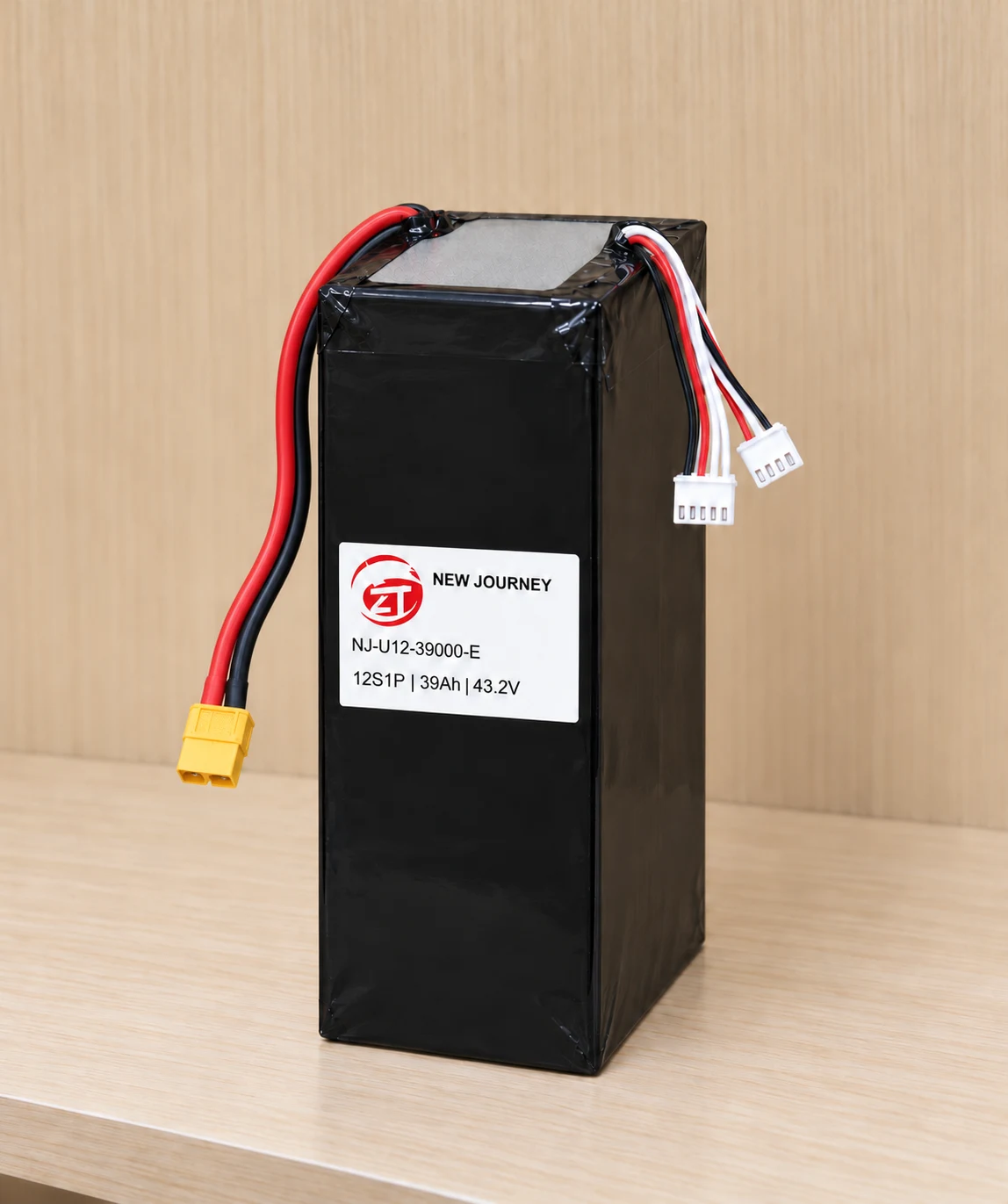
- 43.2VNominal voltage
- 1684.8WhNominal energy
- 50.4VCharging cut-off
- 117AContinuous design target
Technical specifications
| Configuration | 12S1P · 39Ah (39000mAh) |
|---|---|
| Nominal voltage | 43.2V |
| Nominal energy | 1684.8Wh · calculated from nominal voltage × rated capacity |
| Charging cut-off voltage | 50.4V · 4.2V per cell |
| Standard charge current (design) | 19.5A · 0.5C |
| Continuous discharge design target | 117A · 3C |
| Burst discharge design target | 195A · 5C for 10 seconds |
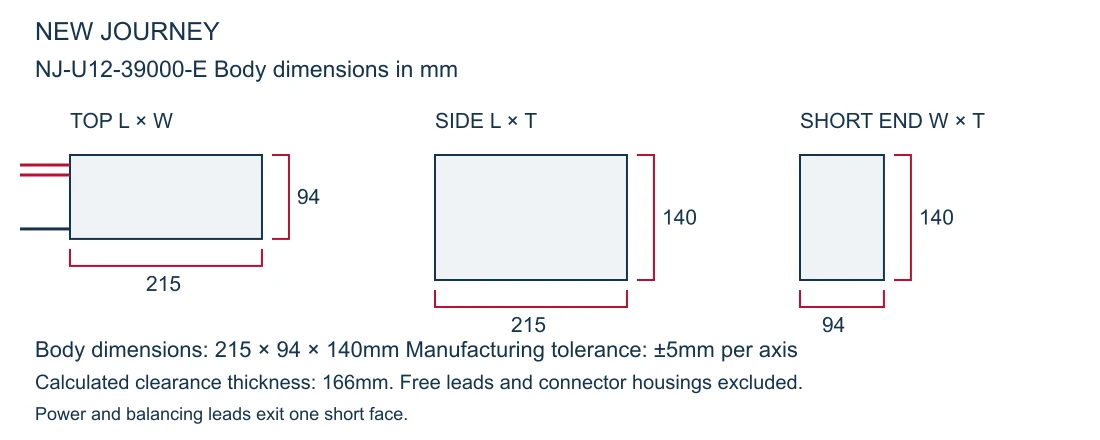
| Body dimensions L × W × T (design) | 215 × 94 × 140mm · ±5mm per axis; free leads and housings excluded |
| Calculated finished-pack weight | 5,408g · production tolerance ±10g from the approved nominal configuration |
| Calculated pack specific energy | 311.5Wh/kg · nominal energy ÷ calculated complete-pack mass |
| Calculated clearance thickness | 166mm · cell growth allowance, separate from initial body tolerance |
| Lead arrangement | About 150mm to connector entry; power and sensing at opposite sides of the same short face |
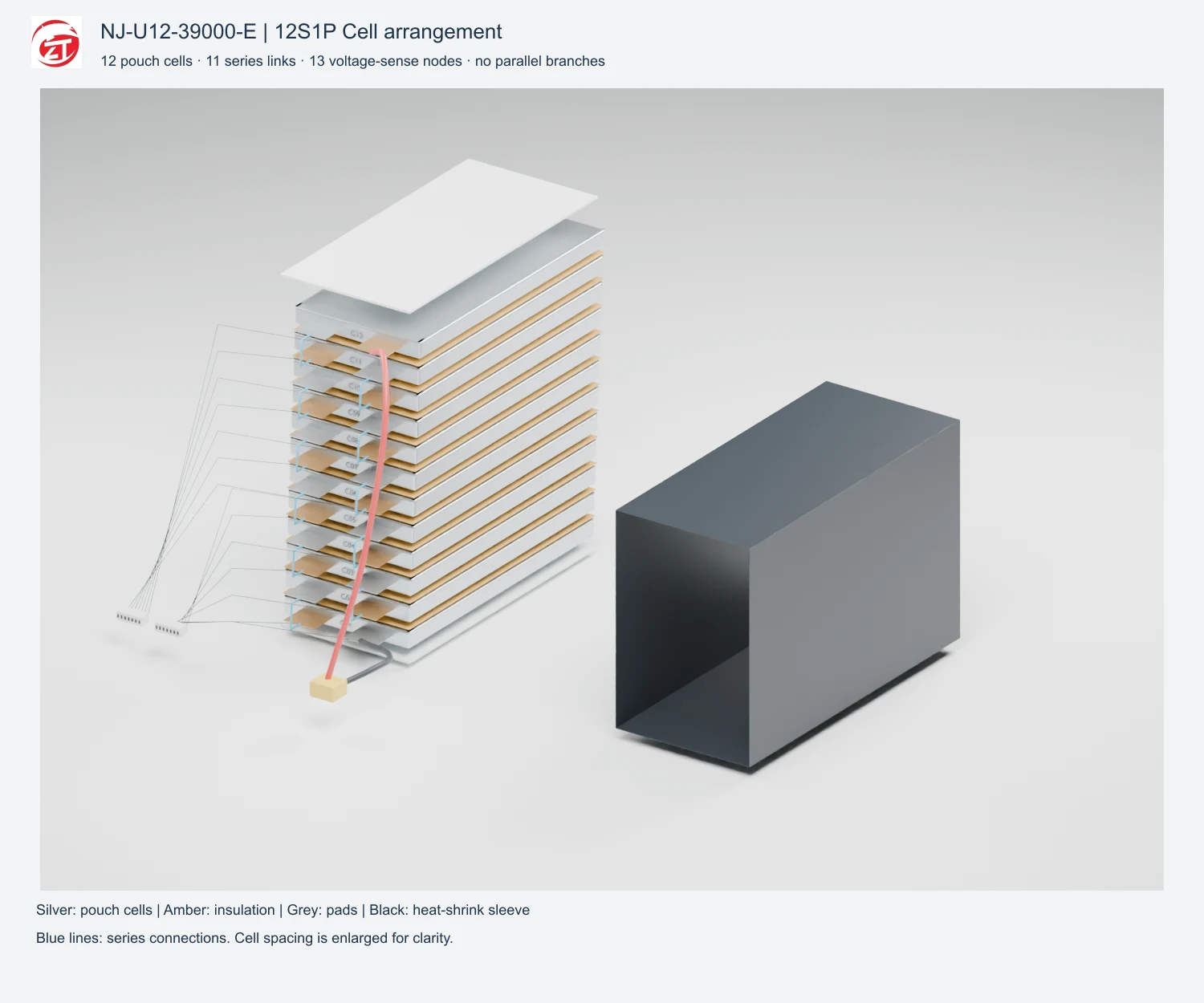
| Balancing interface | Two seven-contact housings · shared B6 · 13 unique nodes |
| Cell model | ECP11087188-39Ah |
| Main connector | Select the complete mating pair, lead specification and polarity for the aircraft |
More stored energy within the aircraft's payload and space limits
A demanding route can justify a larger battery only if the aircraft can carry it. This 12S 39Ah configuration adds 424.8Wh over the 30Ah option, alongside 1,300g of calculated pack weight and 27mm of body thickness. Its continuous-current design target rises to 117A. Compare the complete loaded mission and remaining payload before choosing the extra energy.
Charging voltage and charger matching
An existing 12S charging station must cover more than the 50.4V charging cut-off. Check the 19.5A standard-charge design setting, supported cell profile and access to all twelve balancing groups. The two sensing housings share B6. Confirm the common midpoint, polarity and charger-channel arrangement before ordering an adapter or planning the charging workflow.
Continuous and burst discharge current
Long climbs and repeated recovery peaks place different demands on the battery. Continuous discharge current is targeted at 117A, with a 195A burst target for 10 seconds. Provide voltage sag, time at load and repeat intervals from the installed aircraft. New Journey can use that duty profile to specify the main current path and cable arrangement alongside the battery configuration.
Pack weight and aircraft mass budget
At a calculated pack weight of 5,408g, battery placement matters as well as total takeoff mass. The cells account for 5,160g, with 248g of assembly allowance. Nominal energy of 1,684.8Wh gives a calculated pack specific energy of 311.5Wh/kg. Include straps, tray and aircraft-side wiring separately, then check the payload and balance with the complete system installed.
Battery dimensions and installation clearance
The 215 × 94 × 140mm body needs sufficient mounting depth and a safe removal path. Provide support under the pack and access to both lead groups on the short face. Check that the cover and straps do not press on cable roots. The calculated clearance thickness is 166mm after allowing for cell growth; connector housings and cable bends need additional space.
Series and parallel configuration
The balancing map must match the twelve-series pack, not just the number of plug contacts. Twelve 39Ah cells form a 12S1P configuration with thirteen unique nodes, B0 to B12. The two seven-contact housings share B6. Specify the charger adapter and main charging circuit together to avoid treating the two plugs as separately chargeable packs.
Frequently asked questions
Does 50.4V make it a direct replacement for any 12S drone battery?
No. It establishes only the upper charging voltage. Compare the operating range, current duty, weight, body dimensions, connector polarity and sensing interface for the specific aircraft.
Will 39Ah necessarily extend flight time compared with 30Ah?
It adds nominal energy, but also 1,300g of battery reference mass within this range. Evaluate the aircraft power demand at that installed mass and retain the required landing reserve.
How should the battery be supported during handling and transport?
Support the battery body and keep attached connectors from pressing on the pouch stack or pulling on the exits. Any foam cavity and lead space should follow the selected configuration; shipping documents and packing requirements are determined for that configuration and route.
Battery pack assembly
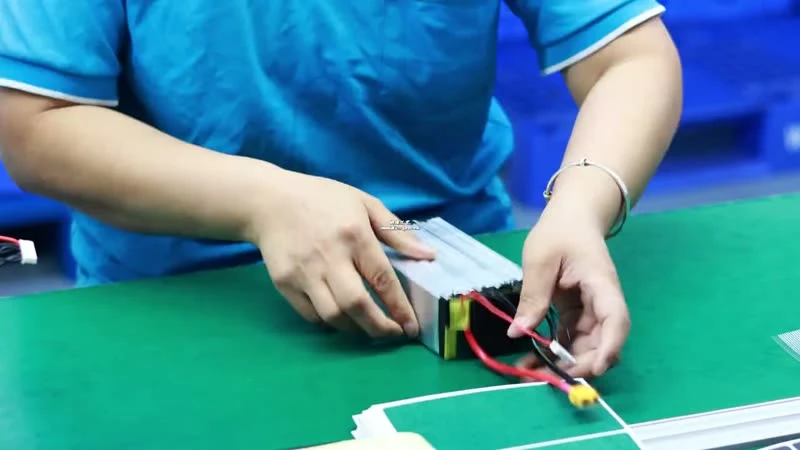
A tall twelve-series pack benefits from body support and a clear lifting path during battery changes. New Journey can specify the short-end power lead and split balancing harness around the mounting arrangement. Provide the cover, straps and charging-adapter details together when requesting a sample.

Discuss your aircraft configuration
Send New Journey your route load, payload limit, battery-bay dimensions and charging-station details. We can help compare the 12S 39Ah and 30Ah configurations and specify the harness for your aircraft.