
Language
6S 39000mAh UAV Battery
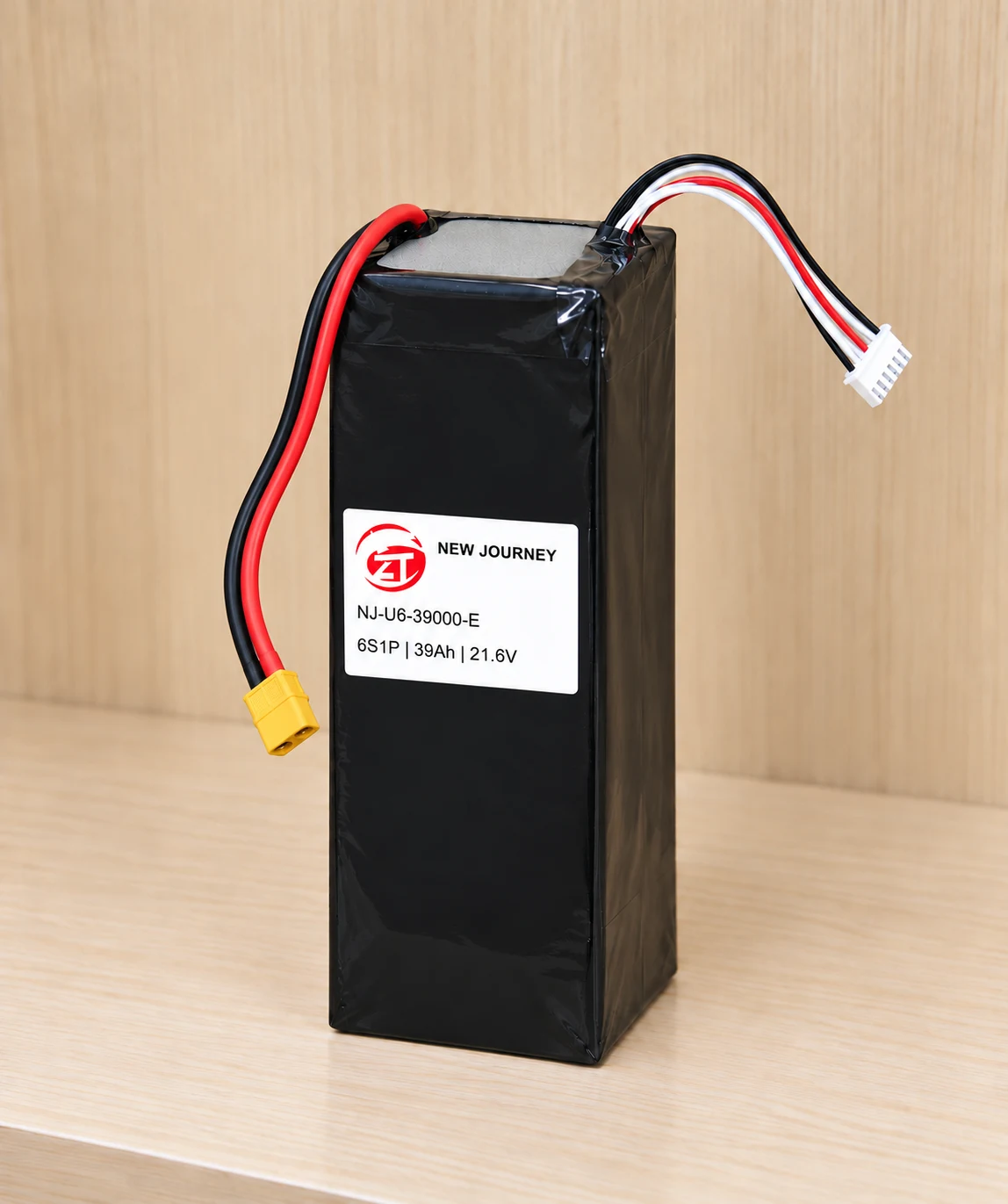
The 6S 39000mAh UAV battery configuration carries 842.4Wh of nominal energy at 21.6V. Reference pack weight is 2,784g, with a 215 × 94 × 72mm body. It combines a larger energy budget than the 6S 30Ah option with a 117A continuous-current design target, for aircraft that can accommodate the additional battery mass.
- 21.6VNominal voltage
- 842.4WhNominal energy
- 25.2VCharging cut-off
- 117AContinuous design target
Technical specifications
| Configuration | 6S1P · 39Ah (39000mAh) |
|---|---|
| Nominal voltage | 21.6V |
| Nominal energy | 842.4Wh · calculated from nominal voltage × rated capacity |
| Charging cut-off voltage | 25.2V · 4.2V per cell |
| Standard charge current (design) | 19.5A · 0.5C |
| Continuous discharge design target | 117A · 3C |
| Burst discharge design target | 195A · 5C for 10 seconds |
| Body dimensions L × W × T (design) | 215 × 94 × 72mm · ±5mm per axis; free leads and housings excluded |
| Calculated finished-pack weight | 2,784g · production tolerance ±10g from the approved nominal configuration |
| Calculated pack specific energy | 302.6Wh/kg · nominal energy ÷ calculated complete-pack mass |
| Calculated clearance thickness | 85mm · cell growth allowance, separate from initial body tolerance |
| Lead arrangement | About 150mm to connector entry; power and sensing at opposite sides of the same short face |
| Balancing interface | Seven contacts · B0 to B6 |
| Cell model | ECP11087188-39Ah |
| Main connector | Select the complete mating pair, lead specification and polarity for the aircraft |
Add route energy without losing sight of takeoff weight
A longer inspection route may need more stored energy, but a heavier battery also changes the aircraft load. Compared with the 6S 30Ah option, this 39Ah configuration adds 212.4Wh and 690g of calculated pack weight. Its continuous-current design target rises to 117A. Assess the loaded aircraft with the larger pack; an energy increase alone does not specify extra flight minutes.
Charging voltage and charger matching
A familiar 25.2V charging cut-off does not settle the whole charging-station choice. This 39Ah configuration uses a 19.5A standard-charge design setting and six-group balancing. Check the charger's current and output-power capability as well as the cell profile and adapter. That establishes whether existing equipment can support the required charging arrangement.
Continuous and burst discharge current
Repeated climbs can matter more than one short peak. Continuous discharge current has a 117A design target, while the 195A burst target applies for 10 seconds. Provide the peak duration, repeat interval and cooling conditions from the loaded mission. Those requirements apply to the complete current path through the cells, joints, leads and mating connector.
Pack weight and aircraft mass budget
Calculated pack weight is 2,784g, including 2,580g of cells and 204g of assembly allowance. With 842.4Wh nominal energy, calculated pack specific energy is 302.6Wh/kg. Include the tray and restraints before deciding how much payload remains. Keep the cell energy-density value separate; the complete battery also contains wiring, connectors and insulation.
Battery dimensions and installation clearance
The larger stack adds depth even when the footprint is similar. The body measures 215 × 94 × 72mm, which is 13mm thicker than the 6S 30Ah option. Check cover clearance, strap adjustment and access to the roughly 150mm leads. Use the separate 85mm calculated clearance thickness when allowing for cell growth in the battery bay.

Series and parallel configuration
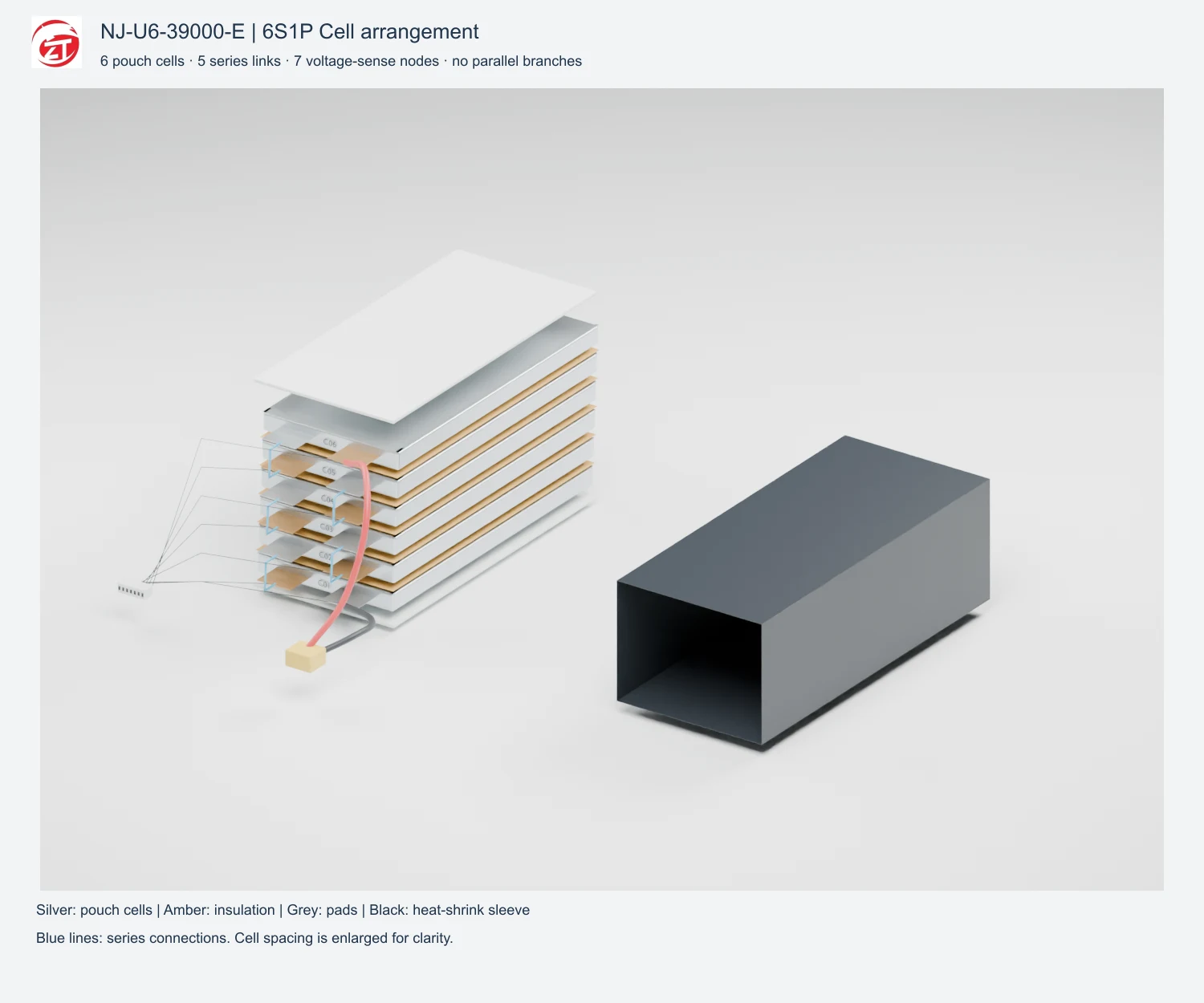
When ordering a replacement, check the balance harness alongside the main connector. Six 39Ah cells form a 6S1P string with seven nodes, B0 to B6. The seven-contact interface must match the charger's polarity and node sequence. Lead direction and length can then be specified to avoid cable strain in the aircraft.
Frequently asked questions
Can the extra 9Ah be converted directly into extra flight minutes?
No. Compare usable energy at the mission load and account for the added 690g relative to the 30Ah design, aircraft power demand and landing reserve. A representative flight is needed to establish duration.
Is a familiar 25.2V charger enough to confirm a match?
It confirms one voltage boundary only. Check charge current, supported profile, balancing pinout and the approved charge circuit as well.
Does the listed weight include the shipping carton?
No. The pack reference includes its agreed attached leads and connectors. The carton, protective foam and aircraft mounting hardware are outside that mass.
Battery pack assembly
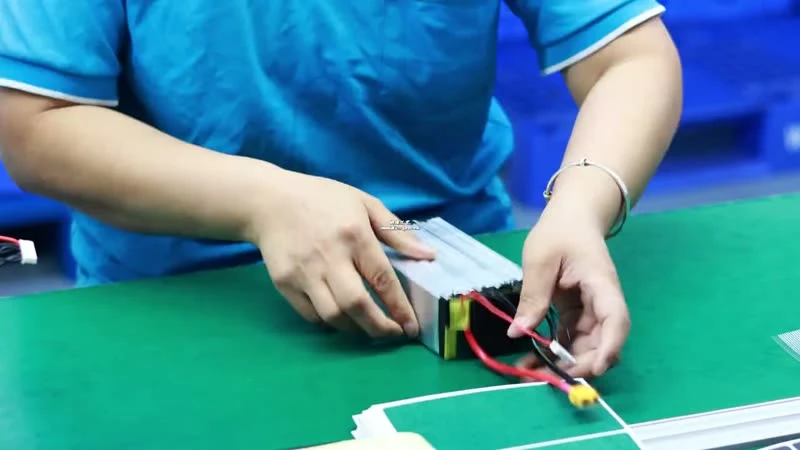
A heavier battery should be supported by its body during handling and installation. New Journey can match the lead direction and connector position to the tray and strap layout. Insulation and sleeve finishing protect the cell stack while leaving both power and balancing connections accessible.


Discuss your aircraft configuration
Send New Journey the route requirement, loaded current trace, payload allowance and battery-bay drawing. We can help compare this 6S 39Ah option with the 30Ah version and specify the connections.